Dash doesn't
guess.
Dash sits inside every PT—DASH module, reads your live data, and answers in operator language. The difference from a generic AI tool isn't the chat box, it's what's underneath.
Built per-module by operators · every source cited by name · never touches patient data.
The AI ops advisor inside PT—DASH.
Your visit mix · this clinic
Declines · no source available
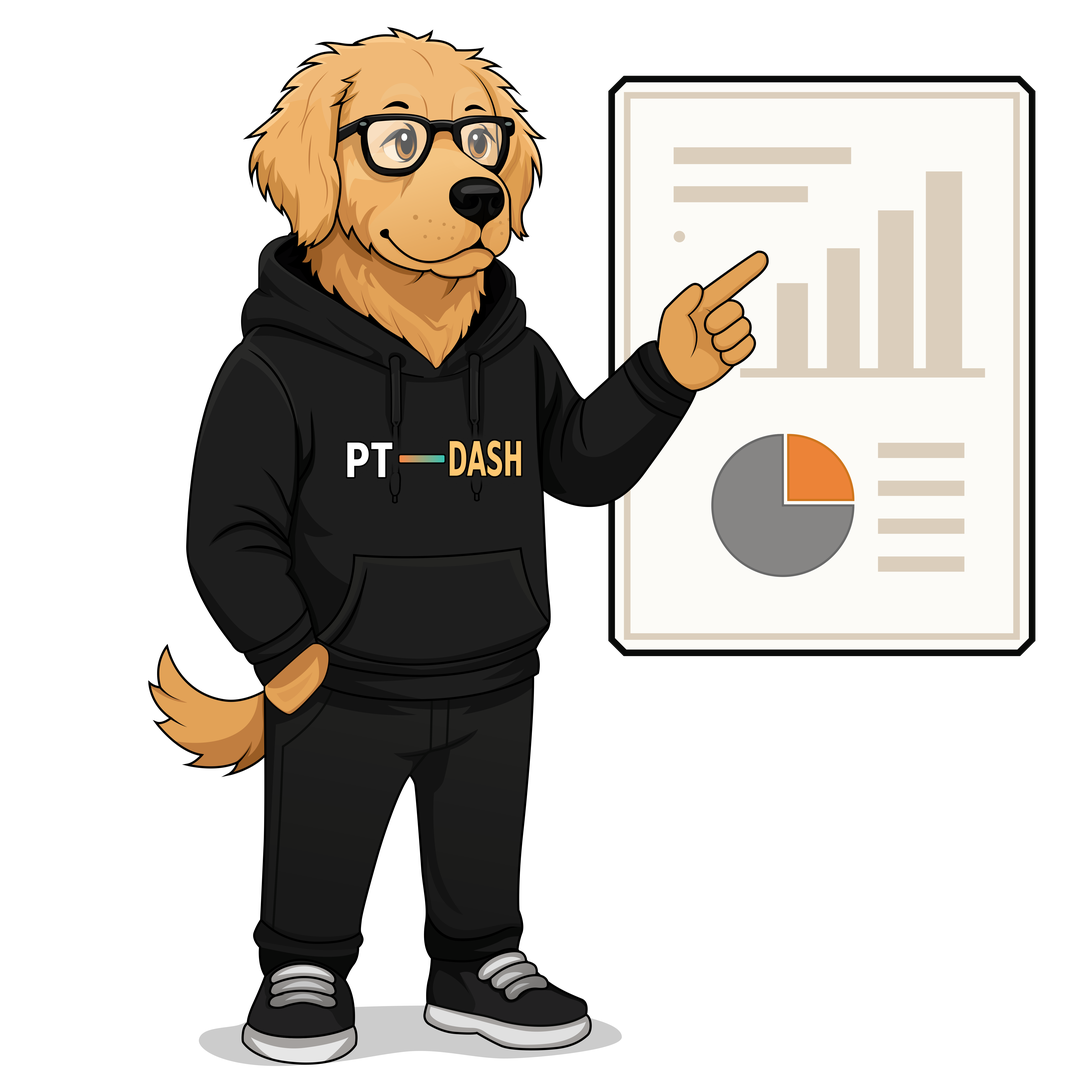
He shows his work.
Dash reads your live inputs, answers in operator vocabulary, and stands behind every number with a named source. When the math doesn't work, when the source isn't there, when the operator-reflex is wrong, he says so. What follows is how that's built.
Purpose-built per module.
A referral-system architect in Referral Playbook, a coach for the hard 1:1 in Personnel Alignment. Not one assistant wearing different hats.
Won't invent numbers.
Barred from inventing benchmarks, fabricating citations, or guessing at CPT codes. "I don't know" is allowed. "Studies show" is not.
Cites the source and the year.
CMS Final Rule 2026, BLS OEWS, and PT—DASH's own proprietary benchmarks, the publication and the year, so you can verify.
No patient data. Ever.
Dash advises on the business decision, not the clinical one. PHI can't reach him, enforced in code, not promised in a policy.
A different expert in every module.
Every module ships with its own instructions for Dash, written by operators who've sat in that seat. Not a generic assistant wearing different hats, a purpose-built advisor in each.
Referral Playbook
Dash works as a referral system architect, scripts and a physician rubric, not hope.
HR Handbook
An editor that flags where you actually need a lawyer.
Personnel Alignment
A coach for the hard 1:1s, surface the driver, classify it, frame the conversation.
Every other module
Its own operator-written brief. The advisor changes with the work.
No invented benchmarks.
No phantom sources.
Dash is barred from inventing benchmarks, fabricating citations, or guessing at CPT codes. When he can't answer with confidence, he says so and tells you what he can pull instead. "I don't know" is allowed. "Studies show" is not.
Reputable sources, and real operator judgment.
Two kinds of grounding, and Dash tells you which is which. The published figures come from named, dated sources, CMS Final Rule 2026 and BLS OEWS, plus PT—DASH's own proprietary benchmarks. The rest is operator experience: judgment built from years working in the field, offered as operator perspective, never disguised as a statistic. What Dash won't do is invent a source or a number to sound sure, when he doesn't have one, he says so.
No patient data. Ever.
Dash advises on the business decision, not the clinical one. You describe situations in operator terms, productivity down 18% over 60 days, a referral source who's gone quiet, and Dash answers at that level. Names, diagnoses, and treatment details never reach it. That's enforced in the code, not promised in a policy.
Tested, not just written.
Every module's instructions ship with a test suite that checks whether Dash holds the line: refusing to invent, citing correctly, and pushing back when you reach for the easy answer that's actually wrong. When the underlying model updates, the tests run again. Good behavior doesn't drift.
The advisor who's
already made the call.
Get started with better decisions today. Direct line to the team.
14-day trial, then $349/clinic per month. Cancel anytime.